
Creativity Burst: Fluff Your Pillows

Woman fluffs the pillows

Creativity via fluffing your pillows? Say, what?

Here’s the thing about pillows.. Have you ever gotten out of bed, made your bed, thrown your pillows on the bed, and noticed how they sag and collapse, especially after sleeping on them for a few days in a row? Nothing like a sad sack pillow.

Here is an easy, fun tip to begin your day that may make it burst with some creative energy: fluff your pillows.

That’s right – just grab your pillows and “fluff them up.” Not only will you notice a lift in your pillows, but perhaps your mood too? You can punch them up, you can gently fold them up, you can throw them on the bed a few times — whatever you do — as your pillows fill up, your energy may move into a higher gear than you were starting out at in the wee hours of the morning.

I wonder if the simple act of fluffing a pillow will “fluff” your days in other ways? Perhaps you will be inspired to elevate how you see a stranger and pay the person a compliment. Perhaps you try a new dish for dinner to elevate your weekday meal? Perhaps you realize your pillows are past fluffing and decide to buy some new ones for comfort. The mere act of fluffing something may inspire you to fluff your life in some way.

If you want a list of ways to revive your old pillows, find it here. Revitalizing something flat like a pillow can also revitalize a part of you on any given day. It costs nothing, takes a few moments, and not only will your bed look better, but you may as well.

In this way, a fluff here could lead to a burst of creativity elsewhere. Fluff away!

Dear Therapist: Celebrating Little Victories

Woman celebrates her little victories

Dear Therapist:

I know most people mark the big things in life, work promotions, graduations, anniversaries, birthdays, and more, but I am wondering if it is selfish to celebrate the little victories we may achieve on any given day? I don’t want to be seen as self-involved, but I also want to celebrate this stuff as I go along to mark what’s unfolding in my life.

Sincerely, One Moment Away From Celebrating the Little Victories

Glad you wrote in! It’s funny how down society is on noticing the little victories of our lives and celebrating them along the way. We somehow receive the message that life is not to be marked and celebrated, except for those very big milestones, i.e. marriage, having children, work promotions, a new home, an anniversary, a Birthday and, of course, the holidays.

Outside of those parameters, life is considered ordinary time. As adults, we are given the message that we must bear the ordinary days and be “OK” without anything special happening. If we are constantly celebrating, then how will there be anything special about the big moments. Rather, keep these to yourself and don’t make a big deal.

Sort of feels like these are our Puritanical roots. Head down, do good work, don’t cause any ripples – good, bad, or otherwise — and pass on calling any attention to yourself. I say a loud and strong, “No!” to this way of living.

I think any day one has good health — ie you wake up and are not in any type of pain — that is a victory day. Do you know how many people wish they woke up to a pain free physical life? We should celebrate at the start of each day when we are healthy.

All through our ordinary days, extraordinary people, events, and kindnesses unfold and they should be celebrated and noticed. In that same spirit, many small victories are won in a day that should be marked. Some of these could include:

  • Your child is toilet trained
  • The dog no longer chews the carpet and house to bits
  • You tried a new food and enjoyed it
  • You got a rebate
  • The service call you had to make had you waiting on hold for less than a minute
  • A beloved item is returned to you
  • A presentation you deliver packs a punch and people really appreciated it
  • You got to sleep with no problem
  • You found time to make dinner
  • A letter arrives with the news you’ve been waiting to hear

Goodness! Our little victories that we experience each day are not to be discounted, but celebrated. It may feel strange given the societal norms to not make such a big deal of any number of little things. Still, to get through the ordinary time, not only should you mark your own little victories, but others as well.

Let’s start a movement!

On the Brink of the Spring Season

Cherry Blossom Blooms about to burst in the spring season
Cherry Blossoms about to Burst Forth!

We are on the brink of the spring season. Or so I keep reminding myself!

I don’t know about you, but it has felt like a very long winter to me. Even February, which usually slips away before I even had time to appreciate her. Ugh! This year is different. I feel like winter has lasted forever and I am ready to see small hints that spring is on its way.

My mind is already drifting to tiny ways that I can bring Spring into my days — even three weeks before she actually arrives. How about you? Are you ready for the change of seasons? For longer days at night? For warmer temperatures? Have you noticed the birds are chirping once again in the early morning hours. Nature is cyclical and if we just take care of our Earth, she will reward us with magic as the seasons change.

Here are a few ideas as we all wait together for Spring to burst forth in full bloom:

  • Flowers! Purchase some and bring a burst of color forth in your home
  • Notice the blooms outside. Snap a picture. Some of these flowers are just so darn courageous!
  • Head to a baseball game.
  • Walk through some cool, crisp grass with your barefoot.
  • Listen to your favorite beach tunes – getting in the mood for summer.
  • Take a walk and observe yourself noticing nature coming alive.
  • Purchase a vegetable like asparagus, which is coming into season, and cook seasonally with your fresh produce
  • How about a spring sponge cake with homemade lemon whipped cream?
  • Go bird watching! They are back, mine as well watch them up close.
  • Light a candle that smells like spring to you.

Now is the time to get ready for the spring season All of these activities can help ease the transition from one season to another and ground yourself in nature. Do alone or share with some others. Whatever you choose, know that spring is about to burst forth and so are you!

Creativity Burst: Art Mobiles

An art mobile hangs and moves in the wind

Are you drawn to art that may not be traditional? If so, you may want to think about hanging up an art mobile – one that you have bought or made yourself. Given I am not very artsy, I wonder how an art mobile would turn out if I actually tried to make one. I am so fascinated with art mobiles, I may just give it a shot.

There is something about delicate pieces of paper, fabric, or other materials (mix and matched even) hanging off of the ceiling, perhaps twirling, perhaps shining (depending on the material) that not only captures my attention, but also gives me a moment to pause and appreciate how something simple and delicate can capture my mind for a little bit of time.

A little bit of time that may refresh me, have me think of something new, help me see the light of the day through a different filter. If there is an art mobile around, I always remind myself to look up and appreciate it hanging there. To better appreciate and see the space I am in in this present moment.

If I were to create an art mobile, it could be as simple as gathering paper, crayons or colored pencils, scissors, string, and a piece of wire to suspend my creative, colorful pieces of paper from. If you were to add a hook to your ceiling, you would have an interesting art piece made by you. Children love little art projects like this, but adults can also enjoy creating an art mobile for themselves too.

Art mobiles provide an outlet to take one’s mind away from whatever is going on and take in the world in a new way. I may just try making one this spring. Butterflies come to mind — along with the bees, of course.

Kindness Matters

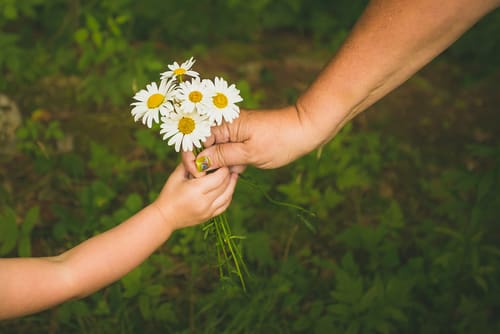
Hands giving and receiving flowers in an act of kindness

I was reviewing my Twitter feed and someone wrote, “Kindness matters.”

For some reason these two words made me stop in my tracks. It feels like there isn’t a whole lot of kindness around these days. Although I do see it on a a more personal one-on-one level more often than on community or society levels. Of course, the argument can be made that individual acts of kindness lead to the whole of a community or society embracing kindness.

I can understand that argument and I tend to disagree with it these days.

What I observe is kindness to those who are like us and we judge as deserving of it or, if the person is not like us, we can somehow feel good about our kind acts which may lead to deeper inroads of kindness remaining close to home. As an example, if you give a meal to a homeless man on the street, this would be regarded as a kind act that you decided to do. Yes, it is kind. Yes, you should feel good about helping someone. No, it does not mean that kindness is now spreading throughout the community.

Enough of these acts and it is supposed to roll on up into a big tidal wave of human kindness. What I observe are many acts like these happening on the personal level and the toil and trouble and unkindness on the larger levels. As an example, I happened to post something politically on social media that lead to an uproar of meanness and hatred. So quick, so fast. Name calling started happening instead of a curious posture. Fire erupted that was the exact opposite of choosing to be kind to another whom you don’t know but appears different to you.

Things are automatic these days, including our acts of kindness. Of course, most of us have no problem extending kindness to our friends and family and people we feel are on “our side.” Also, when we get to determine who to be kind to, kindness abounds. However, the exact opposite is true as well. If our beliefs and/or ideas are challenged, stretched, or otherwise foreign to who we are, automatic meanness seems to pop up as the go to solution.

Kindness matters whether we have agency over the decision of who we are being kind to or not. If we could all take a kind, curious posture no matter what we are meeting in any given day, I think kindness might have a chance at winning the day. Being kind on one level and the exact opposite on another is a mean split that is tearing up society — faster than I can keep up with these days.

Dear Therapist: A Meditation Stance

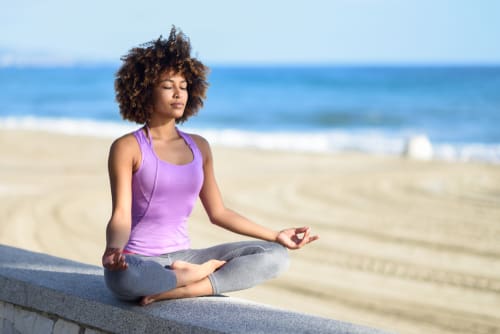
Woman practices mindfulness at the beach

Dear Therapist:

I enjoy being able to hold a meditation stance on a daily basis, but I feel pressure to have to meditate for awhile — like thirty minutes or so. Although this is what I think I should do, I’ll admit I lose interest, my mind wanders, and it’s beginning to feel more like a chore than a time to get in touch with myself by being mindful in such a stance. How much is too much or not enough?

Sincerely, Too In My Head

Good for you for finding that meditation works for you for any time at all. The idea of meditation is exactly as you describe, i.e. a time for you to get in touch with your own mind by settling it into a quiet stance for a period of time.

However, the amount of time is not prescribed. It certainly can feel otherwise in our society, as many people go to meditation sessions and/or retreats and are “taught” how to meditate, which often includes some prescribed length of time to make your session “legitimate.”

In fact, meditation is a practice for you that is practiced based on how it feels for you. It is a completely unique practice with no right or wrong way to do it. If you are sitting in one place, with eyes closed, and legs crossed for thirty minutes that may be driving you crazy with your practice.

My suggestion: bust your meditation out! First, decide if thirty minutes is, in fact, the amount of time you want to spend. If not, decide for yourself what is the right amount of time. This can vary by day and by week. Whatever it is, make the time frame work for you.

Second, is your meditative stance working for you? Many people like to engage in a walking meditation or creative meditation via art supplies. Perhaps sitting in one place for thirty minutes hits it right for you one day and the next day sitting in a meditative space while you draw may be just right or, on other days, grabbing your dog, your hiking boots, and heading to a trail to meditate in the woods is perfect. Whatever your meditative stance, it is absolutely unique to you.

Finally, drop any thoughts that the way you are meditating is wrong. Meditation is a unique practice that is private. Being true to yourself and making yourself feel comfortable and engaged with your practice are the keys to meditating well for one’s self.

Athletes Mental Health

Athletes pose with their medals after winning
Athletes Need Mental Health Care too!

Athletes are amazing. At least I have always thought so. People who find they have a natural inclination toward using their body in a sport where they can find excellence via competition astounds me. Not only does this take strength of body, but also good mental health. In order to focus, be present, and find balance between their athleticism with the other areas of their lives takes a strong mind. Athletes and mental health go hand-in-hand.

However, many athletes are so focused on their sport and caring for their physical bodies, their mental health is not cared for as well as it could be. It is not only sometimes easy for the athletes to ignore anxiety and depression they may feel, but also for others to not be able to recognize that just because someone may be strong physically doesn’t necessarily mean they are feeling this way inside themselves.

Remember when Michael Phelps came out to the news media about how he has suffered with depression even as he competed at the highest levels of swimming? His story has helped many others start to frame athletes as people who also need mental health care. So often the two go hand-in-hand — for all of us.

It’s a good reminder that even athletes who are in amazing physical health may be people who are also suffering from any number of mental health issues. Also, there may be specific ways that they suffer related to competition, i.e. the pressure to compete, the pressure to win, unrelenting schedules, high standards for ways to maintain their bodies, disappointment after a season or match is over, and many more.

If your child is an athlete or if someone else in your life is, make sure to not assume that she is doing well mentally just because she is excelling in her sport. Check in and see what may or may not be going on. Given how often we assume our athletes are strong both physically and mentally, connecting with them in this way will be an important step in helping them reflect on how they are feeling and what they are experiencing even as they compete.

Dear Therapist: Finding hope in hopelessness

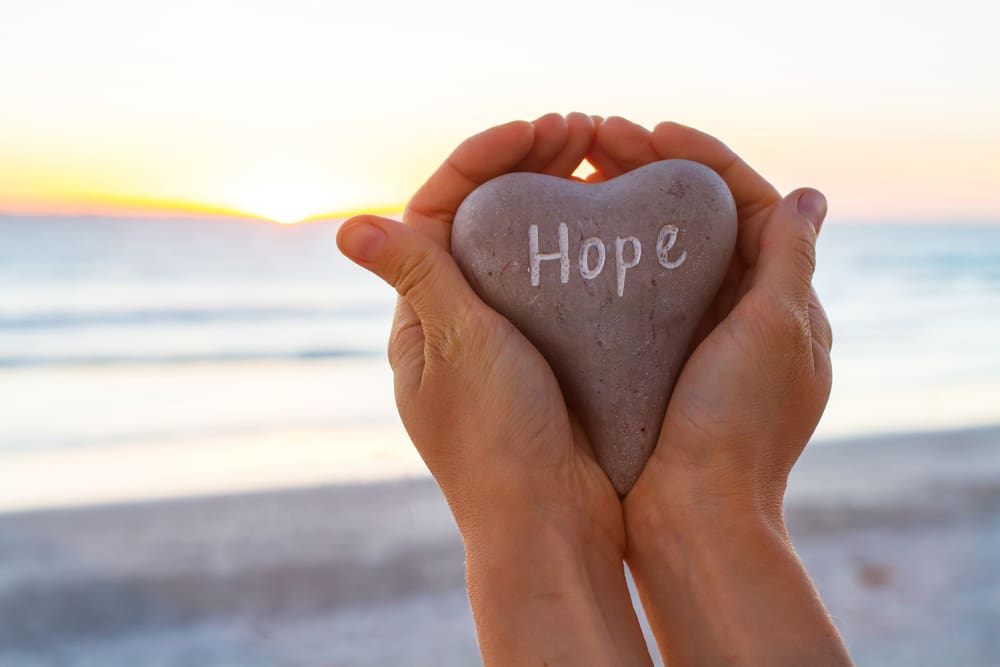
hands hold a stone of hope finding hope in hopelessness
Hands of Hope

Dear Therapist,

How does one find hope when it all feels hopeless?

Sincerely, Hoping for Some Answers

My goodness! What a great question. A few words, but it packs a punch and offers up a true conundrum for the times we are living in indeed. Finding hope in hopelessness!

Earlier this week, I was spotlighting eco-anxiety, a place where it is easy to melt into a state of hopelessness even as people say there is still hope to be found. And it is not just worries about our environment, but, in general, in America there is a lot we can look around at and feel hopeless about. Poverty, gun violence, political discord, cyber attacks, and the list can go on and on.

It also doesn’t help that everything seems to be moving at the speed of light — faster even than that! All of this hopelessness and doses of hope are served up like a fast food meal. There is hardly time to know if one can dwell in both or must we decide to be hopeless or hopeful in our lives?

Whatever it is that is causing you to feel hopeless, it is important to slow down and consider the matter. And not alone, but in community with others. If you don’t feel there is anyone you can share with, then finding other voices in media and community may be a way to feel less lonely in whatever you are considering.

From there, think about all angles of the matter. What are the positives and what are the negatives? Is there a history to the matter? What do more than one voice and opinion say. From here, you can form your own ideas. If it is a problem that can potentially have a solution, creating those ideas and implementing them may move you along into a hopeful stance.

However, sometimes we have to simply sit in what appears to be hopeless and make the matters we are thinking of “our friend” and inviting them in without having to do much of anything, but be present to our sad/bad/angry/hopeless feelings. Sometimes it is healthy to dwell in these states and gain a curious stance over what it all means for you.

Hope seems to be the thing we are all chasing and hopelessness the thing we are supposed to avoid. Flipping that idea on its head and dwelling in them both but not getting bogged down in either place may be a more authentic and honest place for all us to strive to be in during these times.

The Therapeutic Alliance

The therapeutic alliance is a key component to good therapy.
Therapy Offers a Chance for an Alliance!

When I was in graduate school, we were often taught about the “therapeutic alliance.” That feeling the therapist extends to a client to let them know we are aligned with them and their needs, desires, hopes, fears, and anything else he is bringing into the therapy room. I am struck by how clinician-focused this term is when therapists-in-training are taught about it in school.

Yes, the therapist must align and become an ally to one who is seeking therapy, but even more important is for the client to feel an alliance with his therapist. I believe school teaches practitioners that this will happen naturally for the client if we align ourselves with them and, yet, I feel that a client must gauge for themselves if someone if therapeutically attuning to him.

How can you even know if a therapist is forming an alliance with you? And what if the therapist is doing all the right things, but it just doesn’t feel right to you?

Aha! Those are the important questions to keep in mind when creating a new relationship with a therapist. We have been taught how to form an alliance with you, but I don’t think there is much thought given to educating the public who seek therapy regarding whether someone is a good fit or not for you.

My number one suggestion to you is to gain an intuitive sense about what you are looking for in a clinician. Do you want someone direct or perhaps indirect? Do you want someone to stay silent or do you really need to have the person responding to you throughout the session? Are you interested in learning new coping skills or are you there to take a deep dive into old patterns? Depending on your answers to these types of questions, you can observe if the therapist sitting in front of you is going to form an alliance that is supportive of you and your unique self.

There is no one therapist who can meet everyone’s needs and desires. That is not even the point. As much as you the client are unique, so too are the therapists. We have been taught a particular set of skills to align with you, but it is general and not specific to any one person. The magic is when you find a therapist who does align with what you need and who you are that can make the work be wholly attuned to you.

And what if we are doing everything that seems like we are a good match and alliance for you, but you are still not feeling it? It’s completely OK to be honest about it not being the right match for you. We are always trying our best to match and align with you, and we also know it doesn’t always happen. Find your voice and say as much.

The therapeutic alliance is a must and is a golden space when we align from both sides — the Clinician and Client sides.

Creativity Burst: Cloudscapes

Look Up! What do you see?

I had the chance a few weeks ago to look up at the sky for a little chunk of time. The sky looked a lot like the picture in this post. Bright blue sky with puffy, large cotton balls floating by me. I love to sit and look at these types of clouds. A few moments in, I will let my mind go hazy — sort of on, but not completely — and then see what I can see.

What do I see? Ah! All sorts of shapes that look like images of animals, cartoon characters, or any other thing that sort of floats up into my mind. I am amazed at how many faces I find — and mostly happy, although I sometimes run into a frown or two. I think what we see in clouds often reflects how we are feeling.

Taking in cloudscapes and playing an imagery game with yourself is one way to access how you are feeling. It also allows one’s mind to turn off the logical, always on, processing mind and move toward the artistic, creative, imaginative side of the mind.

What if you don’t see anything at all? Perhaps your mind is still too turned on? Letting your mind go soft and hazy seems to be an essential element to finding what may at first appear hidden. Oh my, once you start seeing images, get ready! Every cloud that wanders by is going to show you something new.

Looking up at the clouds often fuels my creative side. I can let my mind wander and become inspired by what nature is serving up to me and I can do it for as little or as long a time as I am interested. It costs nothing and can really put you in touch with a part of yourself that is often silenced as we act and think out of our fast-paced, logical mind.

My suggestion? Look up, let your mind go hazy, and see what creative shapes, images, and more you find today.