Beauty in the Eye of the Beholder


Beauty in the Eye of the Beholder

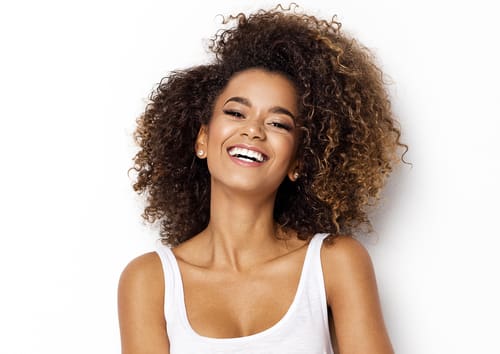
“Beauty is in the eye of the beholder” is an old-fashioned saying that sounds simple enough to understand, but difficult to appreciate without feeling external pressure on one’s appearance. Most of the time, just like this saying points to, the way we see our own beauty is through another’s eyes, the one beholding us. In a way, most of the time, we give our power over to another to judge our looks, our body, our physical appearance by another – rather than ourselves.

All the world over, women look to form their ideas around beauty by looking at others, holding them up as beautiful, and then striving to look like them. Unfortunately, the standards we uphold are often unrealistic and not even attainable. Most of these images are air brushed to perfection. Something that always sets up someone to fail, as perfection does not exist. However, to be one’s best self in the eye of her own self is not even considered as we are always looking to the other for validation and admiration of our beauty.

Although it may seem a part and parcel of one’s life – i.e. the idea of how much the other’s eye is on us and is important to us – we are hardly aware of it at all.  We wake up, work out, eat right, dress up, and make ourselves up to fit into what society and the other deems acceptable. It is very difficult to actually sit down and think about whether we want to do any of these things for ourselves – not just for the beholder. We are taught to not consider our own eye.

Unfortunately, this leads to undue pressure on ourselves – often pressure we simply live with and acclimate to each day of our lives. Stepping out of these expectations is a novel idea. To live one’s life looking upon our beauty from our own eye is a radical concept. To consider our appearance, our bodies, and how we care for ourselves along what expresses our own truth and makes ourselves happy is novel.

Yet, in undoing and letting go of other’s ideals of what is beautiful is a bold first step to living a life true to ourselves. First, think intentionally about your own appearance. What do you love about your body, your face, your hair, and any other features you want to focus on? How does your love of these parts of your body make you feel? Perhaps you want to accent them and focus on these parts of your beautiful self. And it may not be in the ways that society says you should embrace them. Let’s say you love your eyes. You can choose to do them up or go natural. Which way makes you feel beautiful?

Being able to look at beauty standards around the world and then intuitively think through what feels right to you is the important next step to define your own beautiful standards. Living out the truth of your own beauty is what we are then called to do to feel good, look good, express confidence in ourselves, and ultimately to embrace our unique beauty.  

Beauty begins within and not with the eye of the beholder. Let’s take the brave step to reimagine this phrase in this way and embrace our authentic beauty.
Dear Therapist: End of Lockdown Sadness

End of Lockdown Sadness
End of Lockdown Got You Down?

Dear Therapist:

I know this may sound crazy, but I am sort of sad over the end of the full lockdown period. It came on quick where all of a sudden society was completely locked down with everyone in their homes. That took some time to adjust to, but now I have actually made the adjustment and now I am sad to return to the craziness of life as it was. We were only in lockdown for two months, but it also took hold quick. Presence, old fashioned activities, time to cook, time to be – it was a break from so many pressures. How to grieve the loss of lockdown?

Sincerely, Singing Leaving the Lockdown Blues

It may seem strange to you to own that you are going to miss this interesting time. Even now, writing from an area that is still locked down, there is more movement happening. It’s not the same as it was a month or two months ago when society pretty much came to a standstill and everyone was in their homes in a locked down state of affairs.

It was, as you say, a quick and hard adjustment to lock down, and now that we are able to begin to move again and be together, we know this comes with obligation, being busy, less time for self and family, and the pressures of modern day living. When we actually had a moment to take in how our lives shifted and how this felt, I think many of us felt it was a good shift on some level. No wonder you are struggling — you are going to miss parts of lockdown living.

So, one of the first things to do, which I can see you are already doing by writing in, is acknowledge your feelings of grief and sadness that the pure lockdown state is over or gradually is coming to an end depending on where you live. From there, think about what you want to do differently as lockdown lifts. Perhaps you will cook more on the weekends- instead of eating out the entire weekend as you are enjoying cooking and want this to stay in your life. Perhaps you want to walk your dog rather than having someone else do it for you as you find it fun and relaxing.

There are so many new things and ways of being that have come up during this intense time — take time with yourself to choose how you want to see your life in more normal time – perhaps more present, balanced, enjoying different activities in different ways. Also, take a look at what you really missed and what was really difficult for you and be grateful that those things are now over and that life can return in these ways for you.

Life is always changing and these past two months this has never been more true. Now is the time to act on the changes and create your own new normal. Life cannot remain locked down, but this brief interlude has been a prime opportunity to reset.

My best to you as you move from grieving the loss of the lockdown life to celebrating a new normal for you and yours.

A Return to Routine

Return to Routine
Back to Your Routine?

A return to your routine — or not?

Well, the evidence is everywhere. People are emerging from the lock down, shelter-in-place state across the world and America. In Seattle, our lock down continues in many ways that have been lifted in other parts of the nation. However, certain areas have been opened including the hiking paths, parking, camping, medical appointments, dog walkers and more. When I am driving around these days, I am noticing more traffic on the roads, more people out and about, more freedom of movement.

As quickly as we were put into lockdown for several months and had to seek a new normal, we are now being invited back out into the world. The virus is still very much alive and active in society, but so too is man. However, the shelter in place orders allowed for a new routine to take hold for many of us.

Many people have been working from home in their comfortable clothes with more autonomy over how they are working. The rhythms are simply different. With all stores closed, except for grocery stores and pharmacies and a few other places, perhaps you found yourself consuming less over this time. Did you miss it? My guess is you have been spending your time with your family – this closest to you – and your pets. How has it been to slow down and be with your cherished family? Perhaps you are now playing board games and solving puzzles? Maybe you have explored cooking and perfected some new recipes.

Ah! Life has certainly been different, and there have been new pleasures we have been able to explore given the significant disruption to our routines. My guess is as we continue to open up, these new routines and ways of living will recede as we return to our lives and to one another.

However, are there parts of your new lockdown routine that you don’t want to give up, but want to be a part of your new post shelter in place routine? Maybe you don’t miss your gourmet coffee out or shopping? Perhaps you really appreciate not commuting and using that time to ground yourself in your home and garden and family? Has there been a new hobby you have picked up that you do not want to abandon?

This is the perfect moment to take a little time and reflect on how the past few months have been in totality for you. From there, determine what parts of your old routine you would like to restore and what parts you want to take from your new routine and keep. I believe we have all learned a great deal about ourselves and none of these learnings need to be abandoned because people are again moving and interacting.

Intention around how you want to live your life moving forward could be a major shift we feel across society as people renew their sense of what life and living is about based on the truths they learned from slowing down, being limited in movement, and spending significant time with self and close loved ones. Let this be a moment of choice of how you may return to your routine — or not.

Just as there has been something lost as we locked down this past spring, something again will be lost as we move back into society. Mark this moment and make it meaningful for you and yours.

Resiliency

Resilience

**When I wrote this article one week ago, my mind was on COVID. However, after a week of outrage and protests across America, I believe resiliency also affects each one of us as we face systemic racism in America.

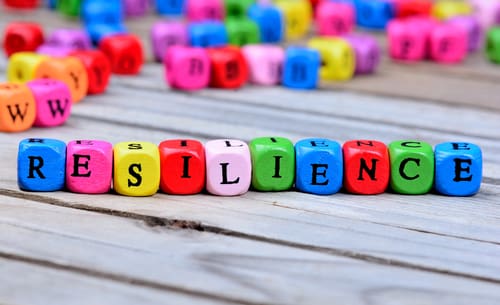
Resiliency. It’s almost a buzz word that we use to define someone as able to persevere through hardship with an optimistic attitude. It is a characteristic that allows one to meet the challenges she faces with a “can do” attitude and has developed inner tools to make the best of a situation.

Always an interesting idea in strength-based counseling, it seems to have gone mainstream today as the pandemic continues to challenge people. If we are resilient we will choose to see the good side, enact our strengths to meet the challenges we have in our lives, and move forward with optimism and strength. It all sounds wonderful, but what makes someone resilient in the first place? And per chance do you have it within yourself?

How People Learn to Become Resilient is an article written in 2016 that seeks to answer this question. Much of the article focuses on children and their ability to have luck in how their life unfolds, such as a caring bond with a caregiver or parent or other adult, Even more important is an idea that children could meet the world on their own terms employing a level of independence and autonomy to the challenges they faced growing up. Something about reliance on self to figure out one’s problems form a young age lead to resiliency.

As much as resiliency can aid us in helping us solve our problems, reduce their impact, and have us reframe to see events as a place to learn and grow from, the collapse of resiliency can be said to be felt when we fall into worry, anxiety, and catastrophe in our minds. It isn’t always easy to remain in a resilient frame of mind. Somehow with resilience being such a buzzword today, for someone to not exhibit resiliency may seem like someone is really in trouble with themselves.

During this pandemic, more than ever, greater society is talking about the general resiliency of mankind to pick itself up, make the best of the situation, and, when the time comes, push on from all of this. There is benefit to carving out a resilient mind frame during COVID-19, but there should also be a place to let down and let go. To collapse into a mood funk that has you looking at this situation or any other that is difficult and filled with the unknown is completely understandable. This frame of mind does not mean you will push on from this when it is all over — it may just mean you need to collapse right now.

I love the idea of resiliency as a strong character trait, but I also want to call your mind to the places and spaces where we don’t feel so resilient and provide space for that feeling state too.

Dear Therapist: To Mask or Not To Mask

To Mask or Not To Mask

Dear Therapist,

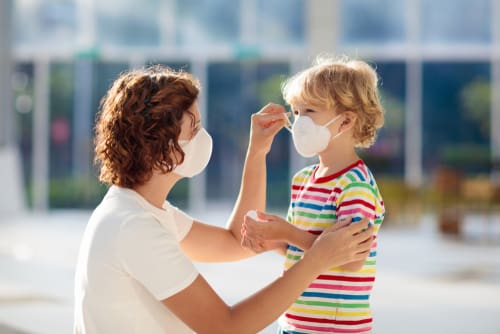
Our state is making it mandatory to wear masks in any indoor spaces and any outdoor space that may have one close to other people. The problem — this is not enforced at all except for public shaming by glares and other non-verbal body language. No one is going to force anyone to put it on. I thought people would just naturally mask up to protect themselves and others. Not so! What do you think? This stresses me out and I don’t like to be in places where I see tons of people without a mask of some sort on these days.

Sincerely, Masked Up

This seems to be THE controversy brewing across America at this moment. People do not want to be told to wear something if they do not want to. As I was mentioning last week, people prize their autonomy in America over any sort of protection or value on community and society. The latter is valued as long as it does not impinge on one’s life or lifestyle in any way.

As such, not only are people not willing to wear them, but state governments are only comfortable making the recommendation but stop short of enforcement. Yes, people can give dirty looks and perhaps even say something directly to the other about it, but I doubt very much it is going to change how people feel about wearing their masks and/or whether they will actually start wearing them for having been shamed.

At some level, the masks seem to represent something about our personal freedom and liberty in America. It is not about public health safety. Until we start messaging this in a way that makes senses to a collective that prizes individual rights above all else the mask requirement will not succeed. I often think the messaging that the mask is not for you, but for the safety of others is completely the wrong message in America. This is the reason many will not do it as people are not valuing others, but rather self.

To undo this ethos is going to take more than COVID-19 and mask wearing. In the meantime, suggesting masks around an argument that preserves self may be the way to go. Americans get taking care of themselves and their own above all else. It sounds backwards and unscientific, but this is the era we live in.

I can hear how stressful it is for you to go out and see many not wearing masks. Debates are raging on social media regarding wearing them or not. There is, of course, a divide. All of us are charged with navigating this divide right now. It sounds like you are alway wearing a mask. This is what we control — ourselves. From there, the other important component is social distancing. So, keeping distance from everyone – whether wearing a mask or not – seems to be another way to be safe in public.

Beginning a discussion in your family, with your friends, community organizations you are involved with, and more may also be a place to start to move the needle away from our individual rights to what it means to build a society based on looking out for one another. This conversation needs to start in order to make something like collective mask wearing becomes something people feel is an autonomous choice that protects all.

This will take time, but there is hope we can move into this territory. In the meantime, mask up and be safe!

Dear Therapist Column Form

Have something on your mind? For questions about mental health, life, and anything in between, please submit the form below — I’m looking forward to hearing from you! If you are interested in therapy services, please contact me directly rather than submitting the form below.

Dear Therapist: Opening Envy

Opening Envy of People at Stores

Dear Therapist;
I live in a State that remains in lockdown. A few things are reopening, but the “shelter in place” order is still active and we are pretty much housebound in our community over 60 days at this point. I have family in other parts of the country that are enjoying dinner out with their friends, getting their hair and nails done, and living life somewhat back to the way it was just a few months ago. I am happy for them, but it also sort of ticks me off to not be able to have my freedom to move. It’s hard for me to be happy for them when I feel stuck. I guess I am envious. How do I keep it together?

Sincerely, Sick of It

I hear you. I think it’s wonderful you can admit to feeling envy for people in other areas gaining their freedom to move and get back to their lives. However, many people feel the risks they are undertaking is not worth it for their health or the health of others. Yet, it also is getting old to simply be indoors with take away, cooking, and watching movies and shows with the same people for months on end.

This pandemic is all about the other and the collective health of society and much less about ourselves as individuals. The problem in America is we are all about the individual and take very little care of the other. And this bears out in so many aspects of American life, but is now in full political mode as people exert their rights over the good of public health. So, continuing to shelter in place for the good of others as many Americans are given the freedom to live as we believe as Americans — for ourselves — makes it even more difficult.

Socialized nations, like Australia and New Zealand and countries in Europe, suffered with not being able to move as well, but believe that society and community comes first over themselves as individuals. In this way, it is easier to shelter in place because the entire nation has the ethos and is in it together.

There is not much we are in together as Americans anymore. The divide between the good of all v. our own personal good is on the line in a way that it has never been before. I hear in your question the desire to care for your community, and, at the same time, your envy of those who can move as we all believe we should. Being envious of this movement after months cooped up is completely understandable.

However, given you have acknowledged your envy, perhaps now frame it for yourself in a new way. Each day you maintain shelter in place you seek to protect and care for your fellow members in society. Something sorely lacking in America today. The notion of kindness is extended in this way. Although difficult, it may make it a little more bearable to remain sheltered in place even as you see your friends and family move with freedom right now.

I feel your envy, your stagnation, and frustration. It’s becoming a lot, but keeping the bigger picture in perspective will hopefully help you hold the breath a little longer. I hope your friends and family in other parts of our nation remain healthy and safe too.

Dear Therapist Column Form

Have something on your mind? For questions about mental health, life, and anything in between, please submit the form below — I’m looking forward to hearing from you! If you are interested in therapy services, please contact me directly rather than submitting the form below.

Good Enough Parenting

Good Enough Parenting

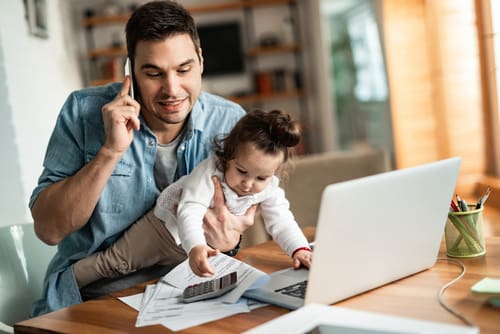
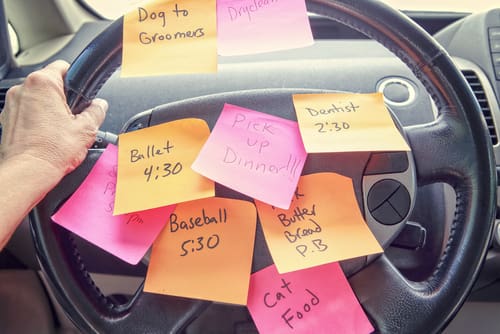
When I returned to graduate school I learned about a concept that felt radical to me at the time. The idea is when relating to one’s child, one does not need to be prefect, but rather “good enough.” Of course, it sounds intuitively correct, but I think for many of us we seek and aspire to be perfect parents for our children. Unfortunately, it sets up parents to fail and children to not be able to face times when their needs are not completely met perfectly and learning how to manage these times internally and externally.

Recently, there was an interesting article in the New York Times that spotlights how parents are managing this time of being shut in with their children as they try to balance their children, work, and rest of life. What I love about this article is it is composed of snippets from families all across America discussing how well — actually not so well — it is all going. It is honest, real, and definitely brought to mind the idea of “good enough parenting” when parent after parent relates that they are failing their kids, barely getting by, mediocre at best, etc.

What I read had me thinking to myself, “Relax! You are all good enough parents doing a good enough job with your children during this pandemic.” I loved reading how many have moved to simply doing what they can and enjoying activities that make their days and their time with their children flow, but I definitely picked up an undercurrent that this was sort of a “giving up” rather than something to be embraced and overjoyed. The guilt of parenting perfection seems to be a residue on the stories.

Good enough is best. It’s realistic and it helps your children not only see you as one with good and bad sides, but also one who is resilient in the face of major challenges. My guess is the children will not recall all the details of these long months, but they may recall the closeness, the creativity, the freedom, the way it was all crazy and yet good — it was good enough.

Creativity Burst: Old Recipes

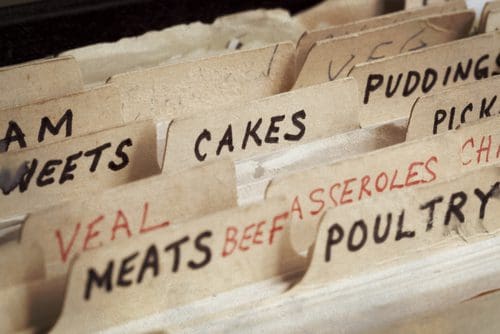
Old Recipes Box

Old Recipes? What’s the difference between them and any other recipe? A great deal in fact.

I was reminded of this when my brother reached out to me asking for my Grandmother’s old recipes as he wanted to try a few. Years ago, my Mother gave me all of my Grandparents’ recipes, which are truly a walk back in time. How so?

First off, many of their recipes are typed up – with a typewriter and all. Can you imagine a time when people would put an index card into their typewriter and type up a recipe? How novel. So, many of these recipes are easy to read.

Second, the types of recipes give me some insight into what they enjoyed eating during their own hey day. For my Grandparents, they loved Texas Chili, Dill Pickles, Buttered Noodles, Tomato Pudding, and other old fashioned recipes that people used to make and not just buy for convenience as they do now.

Third, these recipes, in addition to being typed up, are written on all sorts of slips of papers that give some insight into their lives and how they spent their time. One of my favorites is the Holiday Inn hotel bill that had them spend one night for $15. On the back of the receipt is my Grandmother’s handwriting scribbling down some recipe she heard from whomever she was visiting.

What does all of this have to do with creativity? For me, it gives me a burst to see how others who have gone before me enjoyed their food. Back in those days, people made it from scratch and that feels important to this time. People are back to baking bread and making their own delicious recipes, those that will mark this time as part of our own personal history.

If you have a collection of recipes somewhere in your family it may be the perfect time to give them a review. You may learn what they enjoyed, how they recorded it, as well as some history along the way depending on where they wrote down their recipes. One’s mind can wander back to that time and find reassurance that older generations made their way through, through both good and challenging times, and what they were eating as they did so.

The continuity of care provided by these recipes gives me a creative burst of energy to try one of their recipes or even one of my own. It also inspires me to write my own recipes down on sheets of paper that feel so modern now, but in 50 years will seem vintage, like scraps of paper.

Given this time when people are cooking up a storm as they did many years ago, use it as a space to learn more about people and how they cooked before you and find ways to record your own experience as it is sure to be treasured by the future people who read you and your recipes.

Keeping Good Humor

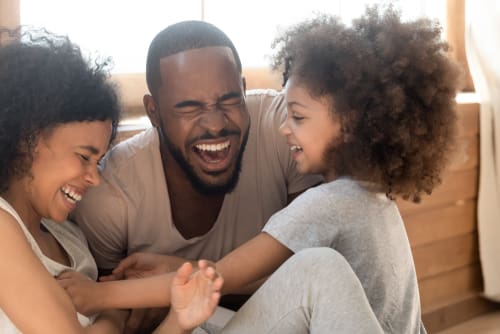
Family Keeping Good Humor

A friend sent me an article about laughter during a pandemic. I think my friend knew I needed a lift and sent it along to me as a reminder to keep good humor during this uncertain time. Of course, I enthusiastically asked her to send me this article as I desperately needed to read it as I sometimes feel it is not OK to laugh or be light and funny during this time. Yet, it’s actually exactly what I need — i.e. to not take the whole thing so seriously and not get caught up in the abyss of the future that is more unknown than ever.

Are you keeping good humor these days? Are you the one sending around funny memes? Are you engaging in a deep belly laugh every now and again? Are you able to see the light side of the situation and make a joke? Or are you the person scouring when others engage in these ways? Whichever your reaction, my guess is that is says something about your mental state.

To be able to laugh is mentally healthy. Yes, even during a pandemic, it is important to give in to the lighter side of life and see that we can still hold on to this part of ourselves that is resilient, courageous, and has the ability to persevere in times of crisis and/or facing the unknown. Giving ourselves permission to give in and enjoy life during this time with good humor is really very important.

Have you noticed if nothing feels fun or funny or that people are annoying you who are embracing this these days? It may be an indicator of being very stressed, anxious, or depressed or a combination of all three states. One cannot embrace good humor – either our own or that of others – if we stay stuck in a serious, dire, anxious frame of mind. Living too far into the future or just looking around at reality in despair can truly lead to bad humor which can lead to low moods, physical ailments, or a general feeling of despair and inertia.

I want to encourage you to maintain some level of good humor during this time, especially if you feel anything but. Moving out of your comfort zone of being in misery, sadness, anxiousness, or hard-heartedness will not be easy, but I want you to open up and give it a try. See if some good humor can make it any better. And don’t do it for any great reason besides lifting your own spirits. Sometimes we feel guilty for putting ourselves above the collective situation and taking care of ourselves through something like laughter.

Good humor, laughter, optimism are all important components to being mentally healthy and resilient during this pandemic. Keep this in mind and laugh away!

Dear Therapist: Where to Donate?

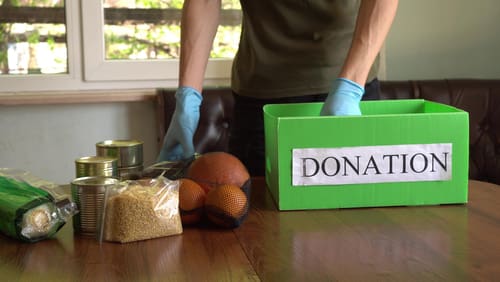
Where to donate food
What can I do to help ease others’ plight?

Dear Therapist,

I watch the news at night and I am seeing the long lines for food at our local food banks in my community and across the nation. I am moved to want to help others and feeding others during this time feels like something I can do to help others at this time. Are there any other ideas for helping people in crisis right now?

Sincerely, Wanting to Help

Good idea! Your local food bank is a wonderful idea to help alleviate the hunger many Americans are experiencing in our communities. Dropping off bags of groceries, volunteering to stock shelves (if volunteers are needed and safety measures are in place) or making a financial donation to national organizations serving food across the country are all ways to get involved in helping alleviate hunger in America. The truth is there has always been hunger in America, but the numbers have exploded and people need food now more than ever for their families.

There are many worthy causes to donate to during this exceptional period of time when economies across the country have largely been shut down. Think about your favorite charities and non-profit organizations and, if you have money to spare, consider donating to them. Perhaps put aside some money for your children to decide on an organization she wishes to support and have her make a direct contribution during this time.

When we give in these ways, it can help alleviate our sense of powerlessness in the situation. Taking action that is within our capabilities can help us feel we can help others and, as such, make this pandemic time not only a little better form ourselves, but for our neighbors too. This sense of contributing to others can be essential during a time like this.

I want to offer one additional idea for helping others during this time. As you know, many of us are still in a quarantine situation in our homes. This has caused a significant increase in the amount of Domestic Violence situations in homes. As you can imagine if this is already in play within a family, being isolated and in close quarantine quarters with no other options, an increase in abuse of family members is going to rise.

Donating to shelters and/or crisis lines serving people who are in abusive situations like this during this time is important to remember and perhaps contribute to if so moved. I think for many of us who are safe in our homes and, although arguments and fights may arise, they are not ones that are going to lead to domestic abuse it is hard to keep in mind that this situation is far from reality for many. Many others are also having these same arguments and fights, and yet they escalate to a place of danger for many. Raising awareness about the issue and contributing to alleviate this suffering may also be a cause you feel drawn to contribute to.

Quite frankly, the need is great across the country – from the arts to non-profits to animal welfare to hunger and much much more. Taking action that you can feel good about and also helps is a double joy. My best to you as you duly consider who, how, when and where you will donate during this pandemic.